 JustList
Short answer: For a typical wedding DJ, plan on roughly $505-about $708 for standard coverage. If you’re on a tight budget, expect rates near about $306-$450; if you want a top-tier pro with lighting and effects, prices commonly run about $658-about $1,177 or more. These figures cover most U.S. weddings but depend heavily on hours, equipment, travel, and extras.
What that planning range actually means
The number you book will depend on how much time you need the DJ, whether they supply sound and lights, the complexity of the timeline (ceremony, cocktail hour, reception), how far they travel, and whether you want upgraded production like uplighting, a fog or confetti moment, or a second technician. Think of the budget range above as a starting point for comparing quotes rather than a fixed price for every wedding.
Typical inclusions in a wedding DJ package
- Performance time for the agreed hours (often 4-6 hours for reception-only packages).
- Sound system for the reception and usually a separate PA for the ceremony if requested.
- Microphone(s) for officiant, vows, toasts and announcements.
- Basic lighting (dance-floor washes or a couple of LED up-lights) depending on the package.
- Pre-event planning meeting or questionnaire to set timeline, must-play and do-not-play lists.
- Set up and tear down time included in many packages (confirm hours).
- MC services to announce entrances, formal dances and transitions.
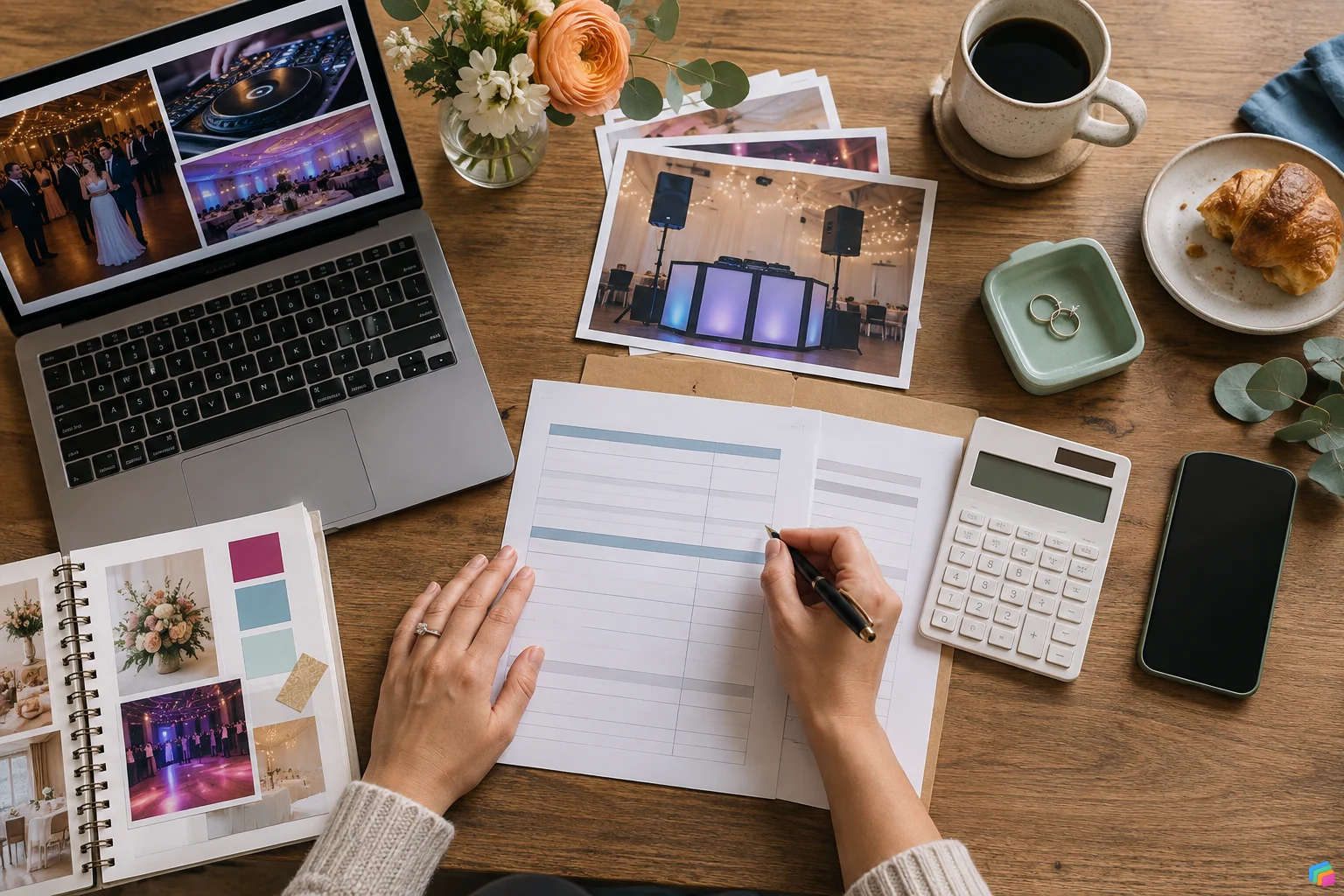
Common exclusions – what you may be charged extra for
- Additional hours beyond the contracted window (overtime is often billed hourly).
- Advanced lighting packages, lasers, LED walls, haze/CO2 cannons or confetti machines.
- Separate staging or a second technician for very large events.
- Travel fees for long-distance or late-night trips, parking, tolls or accommodation.
- Courier or licensing fees for certain pre-recorded tracks or specialty music sourcing.
- Insurance certificates, venue-required permits, or any extra venue backup power.
How DJs typically price their services
- Flat package: One price that bundles a set number of hours, basic gear and a planning meeting. This is the easiest to compare across vendors.
- Hourly rate: Charged by the hour including set up and breakdown or just performance time. Good if you only need coverage for a short block.
- À la carte / add-ons: Base fee plus line items for premium speakers, special lighting, second DJ/assistant, ceremony PA, etc.
- Hybrid: A base hourly fee with optional pre-set add-on packages (lighting, photo booth, emcee upgrades).
Major cost drivers to watch
- Event length: More hours = more cost. DJs charge additional amounts for overtime and sometimes require a wage for a second person for very long gigs.
- Equipment quality and scale: A bigger guest list or open ballroom needs stronger speakers, more subwoofers and sometimes a second PA for the ceremony. Those upgrades add up.
- Production elements: Lighting rigs, uplighting, dance-floor effects, fog, CO2, and image projection are popular but can multiply the price quickly.
- Travel and timing: Destination weddings or late-night events often include travel fees, per-diem or even hotel costs for the DJ.
- Reputation and experience: Highly experienced wedding specialists or DJs with a strong brand will command higher fees than a new or part-time DJ.
- Season and day: Peak wedding season and Saturdays are in high demand and typically cost more than weekday or off-season dates.
Typical add-ons and ballpark costs
Add-ons vary widely by vendor; below are common extras you’ll see on quotes. Treat these as directional ranges, not hard quotes.
- Ceremony PA system (if separate from reception): around $100-about $253.
- Extended performance time: typically an additional $75-about $152 per extra hour.
- Uplighting around a room: roughly $152-about $505 depending on number and quality.
- Dance-floor lighting package (moving heads, washes): roughly $202-about $607.
- Fog or haze machine: about $100-about $306.
- Special effects like confetti or CO2: can be a few hundred dollars for a single use.
- Second DJ/assistant or live emcee: expect a noticeable jump – often about $202-about $505 extra.
Ways to control your DJ budget
- Limit performance hours: Hire the DJ only for the reception and use your venue’s sound or a playlist for the ceremony and cocktail hour.
- Skip nonessential effects: Forgo fog cannons, confetti and expensive image projection if you want to save.
- Book off-peak dates: Weeknights, Fridays, or off-season months often cost less than Saturday peak season slots.
- Bundle services carefully: Some DJs offer lighting packages that are cheaper when purchased together, but don’t overbuy features you won’t use.
- Hire a rising pro: A newer DJ with strong reviews can deliver a great evening at a lower cost – just check samples and references.
- Confirm what the venue provides: If the venue offers a PA or basic lighting, you may not need the DJ to supply it.
How to compare quotes the smart way
- Ask for an itemized quote that separates labor hours, equipment, travel and add-ons – it makes apples-to-apples comparison possible.
- Confirm exactly which hours are included (setup, soundcheck, performance, tear down) and whether setup counts as part of your scheduled hours.
- Check overtime rates and whether the DJ will automatically continue working beyond the contract if the timeline slips.
- Verify backup plans: what happens if equipment fails or the DJ is ill? Do they have insurance or a backup professional?
- Request sample mixes or a recent full wedding recording to assess music selection and mixing ability.
- Compare what’s not included: travel fees, parking, venue insurance endorsements or special permits.
Essential questions to ask every DJ
- Do you have experience with weddings of our size and style?
- What exactly is included in the quoted price? Can I get the breakdown in writing?
- Are setup and breakdown time included in the fee?
- Do you provide ceremony sound and microphones? Is that an extra cost?
- What are your overtime and cancellation policies?
- Do you carry liability insurance and can you provide a certificate for the venue if requested?
- Will you be the DJ on our date or a different team member? If a substitute, can we meet them?
- How do you manage requests and do-not-play lists on the day of the event?
- What is your backup plan in case of equipment failure or illness?
- How much notice do you need for changes to our timeline or music selections?
Tipping and gratuity
Some couples choose to tip the DJ. A commonly used guideline is roughly $49-about $152 or about 10%-15% of the DJ fee if no gratuity is already included. If your vendor includes a service charge, double-check whether that replaces or complements a tip.
Red flags to watch for
- Very low quotes with no itemization – they may skimp on equipment, staffing or travel costs and surprise you later.
- No contract or many verbal-only promises. Always get the scope, hours and fees in writing.
- Unwillingness to provide references, recordings, sample playlists or proof of insurance.
- Pressure to pay the full fee in cash with no receipt or insistence on a non-refundable payment without clear terms.
- Poor responsiveness during planning – if communication is bad before the wedding, it usually won’t improve under pressure on the day.
Sample budget framework / decision checklist
Use this checklist when you’re comparing DJs and making trade-offs:
- Prioritize: Identify your must-haves (e.g., live emcee, ceremony PA, specific lighting) vs nice-to-haves (CO2 blast, LED wall).
- Base fee focus: Get at least three itemized quotes that show base hours, setup/tear down, and ceremony coverage.
- Equipment check: Confirm brand or power of speakers if you’re in a large space; ensure cordless mic for officiant and handheld for toasts.
- Logistics: Note travel time, parking needs, venue load-in restrictions and whether the DJ must bring a generator for outdoor events.
- Contingency: Set aside about 10%-15% of your DJ budget for last-minute changes or overtime.
- Decision trigger: If two quotes are close, choose the DJ who communicates clearly, understands your taste, and has a backup plan in writing.
Wrapping up
Hiring a DJ is as much about chemistry and reliability as it is about price. A slightly higher fee can be worth it for a professional who reads a crowd, keeps your timeline on track and has robust backup plans. On the other hand, if your priorities are modest and your venue provides basic music equipment, you can save by limiting hours and skipping production extras.
Final tip: Before signing, get everything in writing – hours, fees, overtime, cancellation terms and what happens if equipment or the DJ is unavailable. That clarity protects your budget and your day.
Pricing note: The figures in this guide are approximate planning ranges compiled from publicly available sources. We aim to keep this article current and use JustList marketplace statistics as they become available. Actual local quotes vary with scope, timing, materials, travel, taxes, and provider availability.
JustList can help you discover and compare local professionals.







 Scan to download