 JustList
Quick answer: For ordinary repairs plan on about $51-about $197 per hour for a licensed plumber, with common service-call fees around $60-about $272. Routine jobs like a simple drain clearance typically run roughly $197-$675, while a standard pipe repair often falls near $400. Emergency or after-hours work carries a premium – expect higher hourly rates or flat emergency charges.
How plumbing pricing typically works
Plumbers bill in a few standard ways. Understanding the model the contractor uses is the first step to getting an apples-to-apples comparison:
- Hourly labor: The pro charges for the time on site. This is common for troubleshooting, repairs with uncertain scope, or when multiple small issues are addressed.
- Flat-fee or fixed price: Often used for common jobs (toilet replacement, new faucet installation, main drain snaking). A flat fee can protect you from runaway hours but make sure the quote states what’s included.
- Service call or diagnostic fee: A charge to come out and assess the problem. Some contractors waive or credit this when they perform the work.
- Emergency/after-hours premium: Work scheduled nights, weekends, or holidays is billed at higher hourly rates or as a start-at flat charge.
- Materials and parts: Often billed separately. Some plumbers include basic parts in the labor price; others add markups on parts supplied.
What is usually included and what isn’t
Quotes vary, so confirm inclusions and exclusions in writing. Typical inclusions can be:
- Labor for the explicitly listed work (hours or task).
- Basic parts required to complete the job (compression fittings, small valves) when specified.
- Site cleanup and disposal of small amounts of debris.
- Standard warranty on parts and labor for a stated period.
Common exclusions that add to the final bill include:
- Major replacement parts or specialty fixtures (high-end faucets, new toilet or tub).
- Large demolition, drywall repair, carpentry, painting, or tile work.
- Permits and municipal inspections when required.
- Septic system work, sewer line replacement, or extensive excavation.
- Long-distance travel charges or environmental disposal fees.
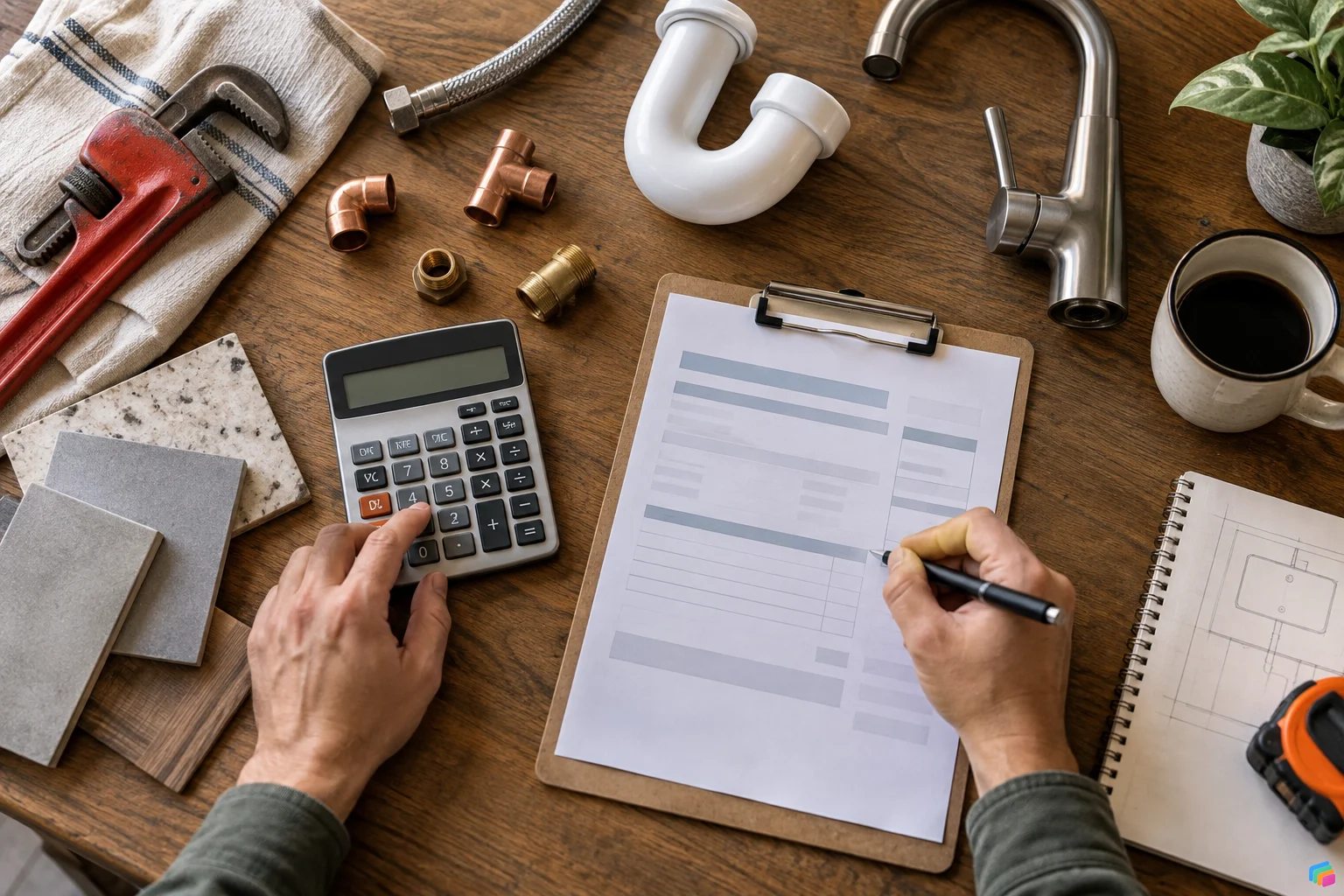
Typical jobs and planning ranges
Below are ranges you can use to start budgeting. These are planning bands, not firm quotes; actual cost depends on location, complexity, and materials.
- Service call / diagnostic visit: About $60-about $272 depending on the contractor and whether it’s an emergency visit.
- Simple drain unclog: Many clearings fall roughly between about $197 and $675 depending on location of clog and whether mechanical snaking, camera inspection, or chemical-free methods are needed.
- Toilet repair or replacement: Minor repairs are near the lower part of hourly ranges; full replacement or complicated installs cost more, especially with floor flange or drain issues.
- Pipe repair: Small pinhole or joint repairs are less costly; repairs requiring cutting into walls, replacing runs of pipe, or dealing with older materials (lead, cast iron) push toward higher ranges; expect figures near $400 for many typical pipe repairs.
- Emergency plumbing: After-hours work usually carries a higher hourly rate (often around $88-$150/hr) or a minimum emergency charge to cover rapid response.
Major cost drivers
Several factors can change the price dramatically:
- Accessibility: Easy-to-reach fixtures are cheaper; opening walls, ceilings, or digging for buried lines adds time and subcontracted work (carpentry, drywall).
- Age and material of pipes: Repairing copper or PEX is usually simpler than dealing with old lead or corroded cast-iron systems.
- Scope uncertainty: If the first inspection could reveal more damage, expect higher bids to account for unknowns.
- Parts availability and fixture choice: High-end fixtures or hard-to-find fittings increase costs and scheduling time.
- Permits and code compliance: Work that requires a permit, inspection, or bringing old systems up to current code will add time and fees.
- Timing: Emergency response, weekend work, and holiday scheduling are consistently more expensive.
- Local labor market: Urban areas or regions with higher living costs generally have higher hourly rates.
Common add-ons and extras to expect
- Parts markup: Some contractors add a percentage on parts or charge retail prices.
- Trip fees or mileage for out-of-area service.
- Camera inspection of drains or sewer lines to locate problems precisely.
- Hydro-jetting for severe clogs or grease buildup.
- Wall/ceiling repair or floor patching after accessing pipes.
- Permits, inspections, or disposal fees.
Ways to control your plumbing costs
- Describe the problem clearly and share photos: Better information leads to more accurate estimates and fewer surprises when the pro arrives.
- Buy fixtures or materials yourself when practical: If you have a specific toilet, sink, or valve in mind, buying it can save on contractor markups. Confirm compatibility with the plumber first.
- Schedule non-urgent jobs during normal business hours: Avoid the emergency premium if the issue is not life- or property-threatening.
- Combine small jobs into one visit: Bundling tasks reduces additional trip fees and can lower the per-task rate.
- Maintain your plumbing: Regular flushing, avoiding grease down drains, and inspecting for small leaks can prevent more expensive repairs.
- Get multiple written estimates: Aim for at least three itemized bids to compare labor, materials, warranties, and timelines.
How to compare quotes effectively
When you have several estimates, don’t just pick the cheapest. Use this checklist to compare bids:
- Is the price itemized? Labor, parts, trip fees, permits, and disposal should be listed separately.
- What’s included in the scope? Look for a clear description of the work to be done and what’s excluded (wall repair, painting, new fixtures).
- Are payment terms stated? Note deposit amount, accepted payment methods, and final payment timing.
- Is there a warranty? Find out length and coverage for both labor and parts.
- Timeline and start date: When will they start, how long will it take, and do they need the job to be staged in any way?
- Proof of insurance and license: Confirm the contractor carries liability insurance and is properly licensed where required.
Questions to ask a plumber before hiring
- How do you charge for this kind of work – hourly, flat fee, or both?
- Will the initial service call be credited toward the job if I hire you?
- Can you provide an itemized written estimate and a sample invoice?
- What brand and quality of parts will you use? Can I supply parts myself?
- Do you carry general liability insurance and worker’s comp? Can you provide proof?
- Do you handle permits and inspections, or will I need to arrange them?
- What is your warranty on labor and on parts?
- Who will perform the work – employees or subcontractors?
- What payment methods are accepted and when is final payment due?
Red flags to watch for
- Very low bids that seem too good to be true – they often omit key work, use inferior parts, or add hidden fees later.
- Contractors who refuse to provide a written estimate, scope, or contract.
- No proof of insurance or reluctance to show a license if local law requires one.
- Demanding full payment up front or cash-only transactions with no receipt.
- High-pressure tactics to sign immediately or claims that the problem is worse than it appears without inspection.
- Poor communication, unclear timelines, or unwillingness to provide references.
Sample budget framework and decision checklist
Use this simple framework to estimate a project and decide whether to proceed or seek more quotes. Don’t treat these numbers as a quote; they’re a planning tool to help you compare offers.
- Estimate expected labor: Decide whether work is likely quick (under 2 hours), moderate (2-5 hours), or extensive (more than 5 hours). Multiply by your target hourly rate (for planning, use about $51-about $197/hr depending on your market).
- Add a service call or diagnostic fee: Typically about $60-about $272 – subtract this if the contractor waives it when hired.
- Estimate parts and fixtures: Low-cost fittings might be $10-about $99; fixtures like toilets or faucets can range widely. Get brand/price guidance from the plumber.
- Permits and inspections: If likely, add a local permit estimate and inspection fee – ask your municipality or the contractor for typical figures.
- Contingency: Add 10-30% for unknowns if walls must be opened or older materials are involved.
- Decision threshold: If your lowest reliable written estimate is within your planned total plus contingency, it’s reasonable to proceed. If bids vary widely, ask contractors to explain differences in scope, timeline, and parts.
Final tips
Collect photos and any prior repair records, be upfront about what you want, and ask for an itemized estimate. For serious issues (sewage backups, major leaks, or basement flooding) prioritize response time and credentials over the lowest price.
If you need help wording a job description or a checklist to send to plumbers when requesting estimates, ask and I’ll draft a short template you can use to get clearer, comparable bids.
Pricing note: The figures in this guide are approximate planning ranges compiled from publicly available sources. We aim to keep this article current and use JustList marketplace statistics as they become available. Actual local quotes vary with scope, timing, materials, travel, taxes, and provider availability.
JustList can help you discover and compare local professionals.








 Scan to download