 JustList
Direct answer: For a private event expect to budget roughly $340-$690 for a single professional bartender booking, with many providers also offering hourly billing in the range of about $41-$60 per hour. Larger events, holiday dates, specialty cocktails, rentals, or concierge purchasing will increase the final price. Use these ranges to plan but get written quotes for your exact date and scope.
What that planning range covers (and what it usually doesn’t)
When a bartender quotes a flat fee or hourly rate, that price commonly covers the labor to serve drinks during your scheduled hours, basic bar tools, and the bartender’s time to set up and break down a simple service area. What is often not included: the alcohol and mixers unless you purchase a concierge service; glassware and large mobile bars; transportation charges for distant venues; gratuity; sales tax; and any required permits or venue corkage fees.
Typical inclusions
- One bartender for the scheduled shift (mixing and serving drinks, maintaining the service area)
- Basic tools – shaker, jigger, wine opener, basic garnish kit, and a cashless POS if the company accepts payments
- Set-up and break-down time often built into the booking window
- Small quantity of ice and disposables in many cases (confirm beforehand)
Typical exclusions
- Main alcohol and mixers-often the host supplies these unless a purchase service is selected
- Glassware and specialty equipment (mobile bars, keg systems, draft lines)
- Barbacks or additional assistants for restocking (recommended for larger events)
- Holiday premiums, travel, sales tax, venue fees, and gratuity
Common pricing models
Understanding how a provider charges makes it easier to compare quotes:
- Flat booking fee: A set price for a block of hours (e.g., a four-hour shift). Additional hours usually billed at an hourly overtime rate.
- Hourly rate: The bartender charges per hour with a minimum booking length (often 3-4 hours).
- Per-guest or per-head: Less common for bartenders alone but sometimes used for full bar packages where labor plus alcohol and glassware are bundled.
- Concierge or purchasing service: The company buys all alcohol and supplies on your behalf for a service fee or a percentage of purchases.
- Rental-inclusive packages: Bartenders with a mobile bar, glassware, and bar tools bundled into one price-good for simpler comparison but check what’s included.
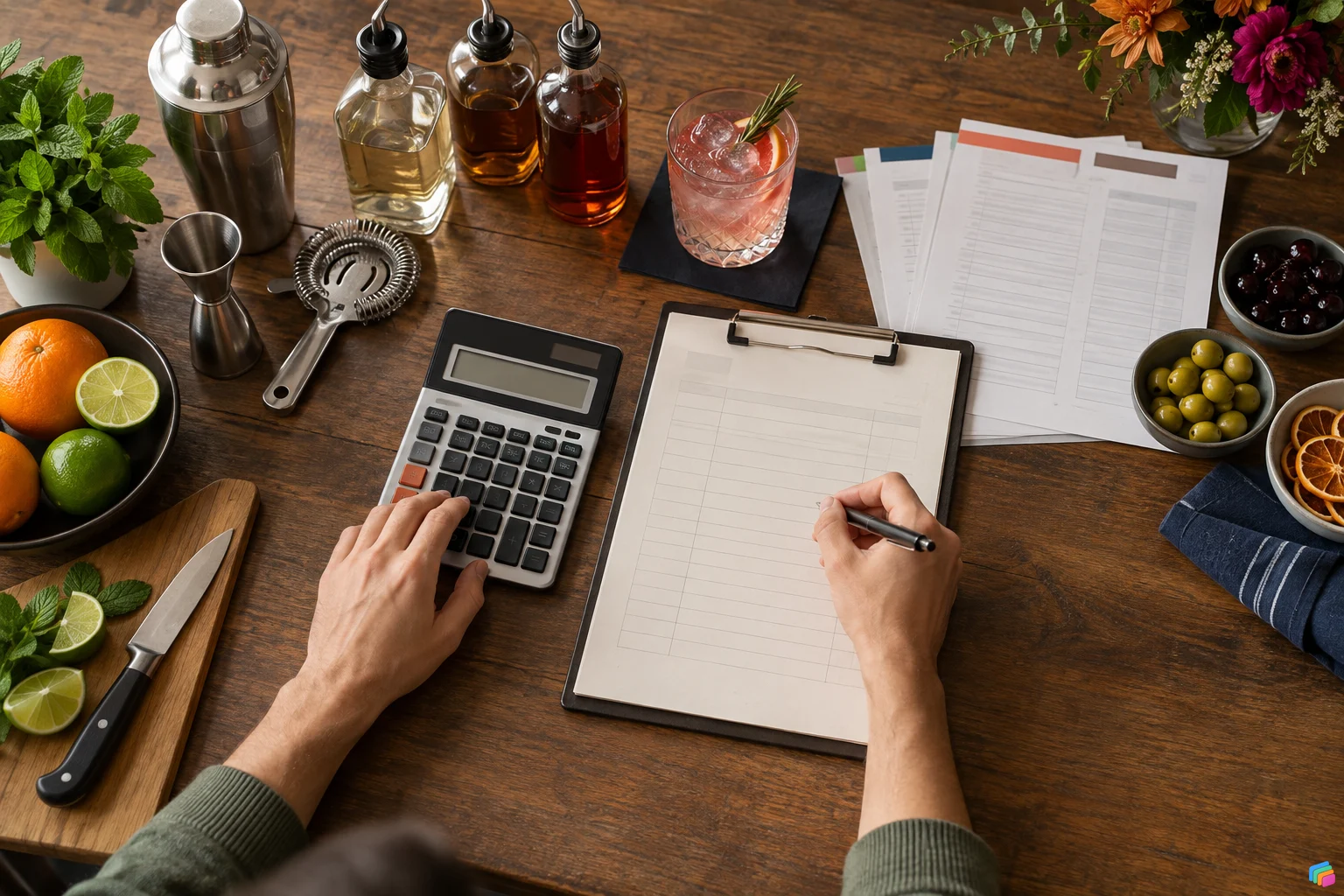
Major cost drivers to watch
- Event size and pace: More guests mean more staff. A common staffing guideline is roughly one bartender per 50-75 guests for standard cocktail menus; if you plan a lot of complex mixed drinks expect more hands.
- Length of service: Minimum shift lengths and overtime rates add up. Cutting an hour or two can be the easiest way to save.
- Menu complexity: Specialty cocktails with many ingredients or elaborate garnishes slow service and can require higher rates or extra staff.
- Time and day: Weekend nights and holidays often carry premiums.
- Location and travel: Remote venues, downtown delivery fees, and parking surcharges can appear as line items.
- Rentals and equipment: Glassware, mobile bars, keg systems and draft lines are billed separately unless included in a package.
- Liability and licensing: Proper state or local permits, alcohol-service training, and insurance typically raise a company’s price but reduce risk.
Common add-ons and typical costs to expect
- Barbacks / assistants: If your event needs back-of-house help, expect an additional lower hourly rate for each assistant.
- Glassware rental: Events that don’t provide glassware usually rent per piece; costs vary by style.
- Mobile or wooden bars: Portable bar units are often rented for a one-time fee.
- Concierge purchasing: Some providers will shop and deliver alcohol and supplies for a fee or a percentage of purchased items-often billed as a convenience percentage rather than a flat margin.
- Special equipment: Ice machines, refrigeration, draft systems or specialty cocktail garnishes are additional charges when required.
How to control your bartending budget
- Limit service hours: Book professional bartending for peak service moments, such as cocktail hour and the first part of reception, rather than the full event.
- Offer a limited menu: Stick to beer, wine and one or two signature cocktails or batch-prepared drinks to reduce preparation time and need for staff.
- Allow tip jars or gratuity: If your venue allows a tip jar, some providers reduce their base rate. Alternatively, include a service charge as a predictable line item for budgeting.
- Provide alcohol yourself: Buying wine, beer and spirits yourself and supplying them to the bartenders often lowers costs versus concierge purchasing.
- Bundle rentals with venue: See whether your venue can provide glassware or tables to avoid external rental fees.
- Negotiate minimums: Ask if there are discounts for weekday events or off-peak times; many companies are flexible on date and time.
How to compare quotes fairly
When you receive multiple bids, normalize them so you’re comparing the same scope. Ask each provider to confirm these points and put them in writing:
- Total hours included and the overtime hourly rate.
- Number of staff included and their roles (bartender vs. barback).
- Exactly which items are included (tools, ice, disposables) and what’s extra (glassware, mobile bar).
- Travel, parking, permit, and sales tax policies.
- Gratuity expectations or mandatory service charges.
- Cancellation, rescheduling, and minimums policy.
Convert each quote into two comparable figures: a per-hour labor cost and an estimated total event cost that includes likely rental, alcohol, and service fees. That makes it easier to spot unusually low or high offers.
Questions to ask every bartender or company
- Do you carry liquor liability insurance and can you provide a certificate of insurance for my venue?
- Are you licensed and certified to serve alcohol in this jurisdiction?
- What is your minimum booking length and overtime policy?
- How many bartenders and barbacks will you provide for X guests and why?
- Do you supply glassware, a mobile bar, ice, and disposables-or are those rented separately?
- What is your cancellation and refund policy, and when is the deposit due?
- Can you provide references or pictures from recent similar events?
- How do you handle intoxication or difficult guests?
- Do you offer a purchasing/concierge service for alcohol, and how is that fee structured?
Red flags to avoid
- No written contract or vague terms on what’s included.
- Lack of proof of insurance or licensing when your venue requires it.
- Extremely low bids with no itemization-likely they’ll add fees later.
- Refusal to provide references or examples of prior events.
- Unclear tip policy or pressure to tip in cash without documentation-clarify gratuity up front.
Sample budget framework and decision checklist
Use this simple framework to estimate and compare total costs. Replace the placeholders with your quotes.
- Base bartender fee: $_____ (flat booking or hours × hourly rate)
- Additional bartenders / barbacks: $_____
- Glassware & rentals: $_____
- Mobile bar or setup fee: $_____
- Alcohol and mixers: $_____ (host-supplied) or concierge fee $_____
- Gratuity / service charge: $_____
- Travel, permits, taxes: $_____
- Contingency (10-15%): $_____
- Estimated total: $_____
Decision checklist before booking:
- Confirm guest count and expected peak pour times (cocktail hour, dinner, after-party).
- Decide menu complexity: signature cocktails, batching, or beer & wine only.
- Confirm whether you’ll supply alcohol or want a purchasing service.
- Ask venue about glassware, corkage, and service restrictions.
- Get a written quote and contract detailing hours, staff, inclusions, and cancellation policy.
Final tips and closing notes
Hiring a professional bartender brings order to your beverage service and mitigates liability risks, but costs can vary widely depending on scale and service level. Ask for itemized quotes, double-check insurance and licensing, and align staffing numbers to the expected guest count and drink menu.
Armed with the checklist and budget framework above, you can collect comparable bids and make a confident choice that fits your event and wallet.
Pricing note: The figures in this guide are approximate planning ranges compiled from publicly available sources. We aim to keep this article current and use JustList marketplace statistics as they become available. Actual local quotes vary with scope, timing, materials, travel, taxes, and provider availability.
JustList can help you discover and compare local professionals.






 Scan to download