 JustList
Quick answer: a service description that converts follows a simple four-part framework – clear positioning, exact scope, believable proof, and a single, easy call to action. Start with one strong sentence that tells a prospect who you are for, spell out what you will and will not do, back it up with proof, then end with the next step. Below is a step-by-step process, concrete examples you can paste and edit, checklists, common mistakes, and a practical next step to update your listings and test results.
The 4-part framework at a glance
Every winning description contains these elements in this order:
- Positioning – who you serve and what outcome you deliver in one clear sentence.
- Scope – what is included, what is excluded, typical timelines, and any important prerequisites.
- Proof – short social proof, a concrete example, a before/after, or a specific credential.
- Call to action – one, easy next step with a low friction way to contact or book.
Place the positioning up front to hook the right reader; use the rest to remove uncertainty and motivate a contact.
Step-by-step: build a description in 20 minutes
Define the ideal customer and outcome (5 minutes)
Write one sentence: customer type + main outcome + distinguishing detail. Example pattern: ‘I help X achieve Y by Z.’ Keep it under 20 words.
Examples:
- I help busy families keep tidy homes with reliable weekly cleaning that respects your schedule.
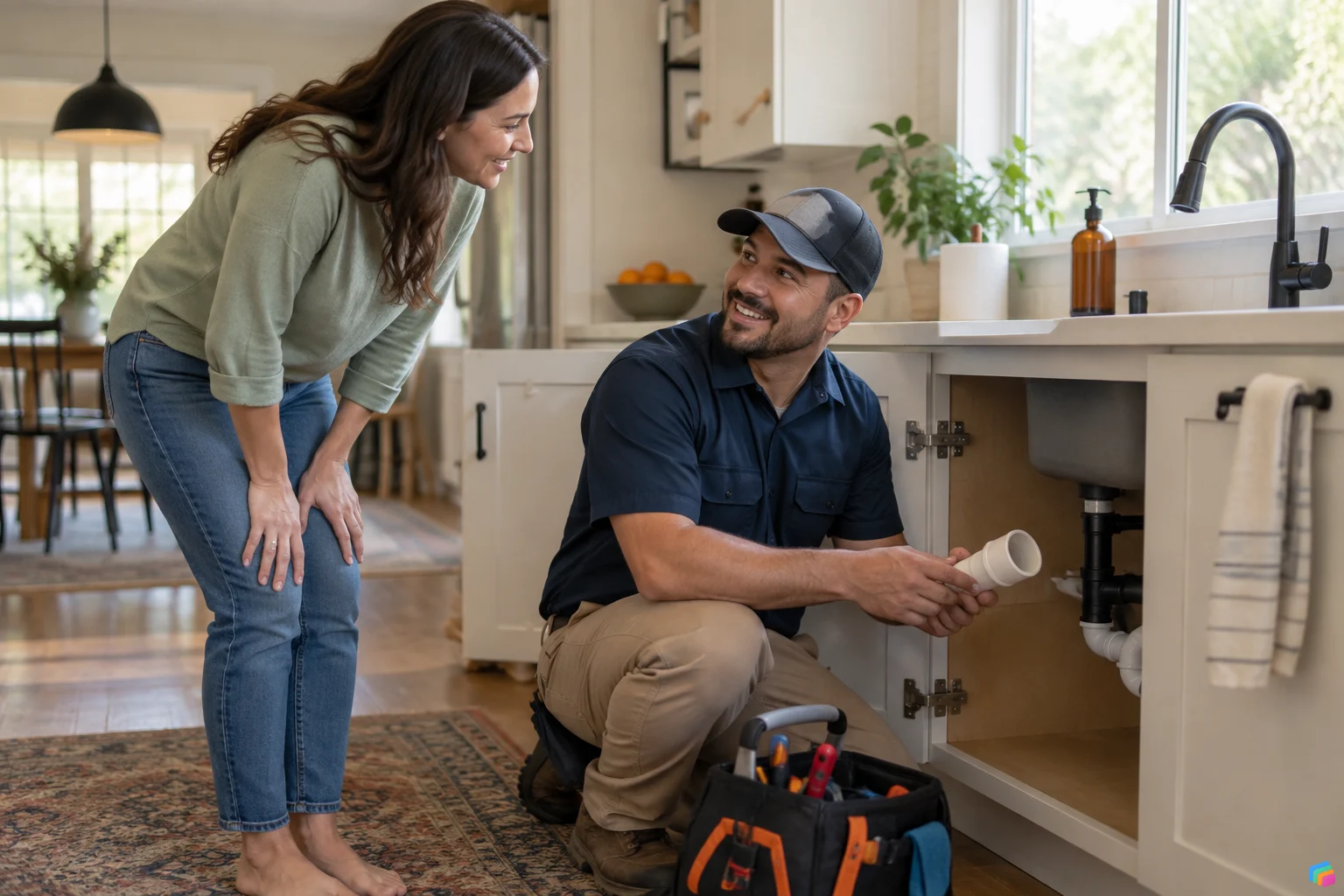
- I repair kitchen sinks for homeowners in Oak Ridge and get drains flowing again the same day.
- I design small, low-maintenance front-yard landscapes for renters and homeowners in urban lots.
Set clear scope: what you do, what you don’t, and how long it takes (7 minutes)
Prospects leave when they are unsure. List the main deliverables and any exclusions. Include a typical completion window and any prep needed from the customer.
Example structure:
- Included: inspection, parts, cleanup.
- Not included: structural repairs, permits, major rewiring.
- Timing: most jobs done in 2-4 hours; weekend slots available.
Short sample for a plumber:
Includes: diagnosis, replacement of standard P-trap or sink basket, leak test, and cleanup. Does not include vanity replacement or cabinet work. Typical visit 60-90 minutes. Call before booking if you have a damaged cabinet.
Add believable proof (5 minutes)
Use one of these: a concise customer quote, a quick before/after example, the number of years you have worked locally, or a specific warranty. Keep it short and verifiable.
Examples:
- Local business since 2014 and insured.
- Hear from a customer: ‘Fast, clean, and fixed our leak in under an hour.’
- All work includes a 30-day workmanship guarantee.
End with one clear call to action (3 minutes)
Tell them the exact next step. Offer one preferable contact method and an alternative. Use urgency or a scheduling convenience only if it is real.
Examples:
- Message now to get a same-day estimate. Text or call 555-1234.
- Book a free 15-minute phone estimate or request a photo to get a firm price.
- Click schedule to see available slots this week. No obligation.

Short before-and-after examples you can adapt
Below are concise, trade-specific rewrites that show the difference between vague and converting language.
House cleaner
Before: I offer residential cleaning services and use safe products.
After: I clean 3- to 4-bedroom homes for busy professionals with hypoallergenic products. Standard 90-minute tidy with kitchen, bathrooms, dusting, and vacuuming. Not including oven deep-clean or garage. 30-day satisfaction promise. Book a 90-minute appointment online or text a photo for a firm quote.
Electrician
Before: I handle electrical repairs and installations.
After: I fix household wiring and install ceiling fans for homeowners in the metro area. Includes safety inspection, parts, and cleanup. Major panel upgrades and city permits not included. Most jobs done same day. Licensed and insured. Call to schedule a 30-minute estimate or send a photo for a price range.
Landscaper
Before: Lawn care and landscaping services.
After: I create low-maintenance curb appeal projects for narrow city yards. Services include planting, mulch, and weekly maintenance. Not offering full hardscaping. Typical install 1-2 days. Free design consults for local clients. Schedule a consult or upload yard photos for a quick plan.
Two editing passes that make copy convert
Pass 1: Clarity and scope
- Remove jargon. Replace general claims with specifics.
- If a sentence starts with we or our, make it about the customer instead.
- Force yourself to answer: who, what, when, how, and cost pointers.
Pass 2: Proof and action
- Add a short quote, timeframe, or guarantee.
- End with one action and a low-friction alternative (text, photo, short form).
Checklist: a description that works
- One-line positioning statement visible above the fold.
- Clear list of main deliverables and exclusions.
- Typical timeframe or appointment length.
- One specific proof point or short customer quote.
- One simple call to action with contact method.
- No more than 200-300 words for online listings – long enough to remove doubt, short enough to scan.
Common mistakes and when to ignore advice
- Too vague: Saying ‘high quality’ or ‘professional’ without specifics. Fix it by stating a concrete outcome or timeline.
- Too long: A wall of text will chase away readers. Use bullets and short sentences.
- Trying to be everything to everyone: Broad appeals feel generic. Niche positioning sacrifices some leads but increases conversion from the right leads.
- Overpromising: Avoid guarantees you cannot keep. Underpromise slightly and overdeliver.
- Price paralysis: Avoid listing a single price for everything. Instead offer ranges or a clear path to a quote like a free estimate.
Tradeoffs to consider:
- Specific niche vs volume: Niche wording reduces inquiries but raises the quality of leads. If your schedule is full, niche is better; if you need volume, broaden slightly but keep clarity.
- Detail vs speed to contact: More detail reduces follow-up questions but may overwhelm skim readers. Put detailed scope in bullets and leave a single-line summary at the top.
How to test and measure success
Practical tests you can run across a listing or ad platform and on your website:
- Change only one element at a time: heading, proof, or CTA.
- Measure inquiries, booked jobs, and lead quality for two weeks after the change.
- Ask a simple question on intake: ‘What made you reach out today?’ Use the answer to refine wording.
A fill-in-the-blanks template you can use now
Copy and adjust this template into your listing. Keep it under 250 words.
I help [ideal customer] get [main outcome] by [how you deliver it]. Included: [bulleted list of main tasks]. Not included: [common exclusions]. Typical visit takes [timeframe]. Proof: [brief warranty, years, or short customer quote]. Next step: [single call to action and contact method].
Example filled in for a handyman:
I help homeowners fix small interior repairs quickly and affordably. Included: door adjustments, drywall patches, faucet replacements, and light fixture swaps. Not included: full room remodels or structural repairs. Most jobs are completed in 1-3 hours. Local and insured with a 30-day workmanship guarantee. Message for a same-day estimate or send photos to get a firm price.
Practical next step – what to do after reading this
- Use the fill-in-the-blanks template and the checklist to rewrite the top paragraph and bullets. Keep it to 150-250 words.
- Post the update and track inquiries and bookings for two weeks. Note lead quality and common questions.
- If inquiries are low but quality is high, keep the niche. If volume is low and you need more work, broaden the positioning slightly and repeat the test.
Writing a better service description is a repeatable skill. Treat your listing like a living sales page: refine your positioning, tighten the scope, prove your credibility, and always finish with one clear next step.
JustList can help you discover and compare local professionals.






 Scan to download